Tag: yoga

  • The Burden of Giving

    When Generosity Feels Like a Curse

    Why do we feel the need to be needed? Why does our existence seem to demand that we serve a purpose in the lives of others? Across cultures and philosophies, human beings have sought meaning through contribution—through being useful, needed, or even indispensable. But what happens when our gifts are rejected? When instead of gratitude, we receive resentment? When instead of connection, we feel alienated?

    I have spent a lifetime giving—offering what I believed to be pearls of wisdom, truth, and liberation from the illusions of the world. Yet, more often than not, I have felt like I was casting pearls before swine, watching as those I tried to help turned against me, or worse, dismissed what I had to offer as useless.

    The Paradox of Giving: Purpose vs. Rejection

    It is often said that to give is divine, that generosity brings us closer to our higher purpose. But giving indiscriminately, without discernment, can lead to an emptiness greater than selfishness ever could. There is a spiritual pain that comes from seeing our gifts wasted, from feeling unseen, unheard, or even resented for trying to help.

    So, how do we navigate this paradox? How do we ensure that our giving is both meaningful and received with an open heart? And most importantly, how do we prevent ourselves from becoming depleted in the process?

    Discerning Where to Give: Wisdom in Generosity

    Perhaps the first lesson is that not everyone is ready to receive. Just as we do not feed a newborn solid food, not everyone is in a place to accept deeper truths, healing, or freedom from the illusions they still cling to. Giving should not be about forcing enlightenment upon others but about meeting people where they are.

    This brings us to an uncomfortable but necessary realisation: Sometimes, people do not want what we believe is valuable. In a world driven by materialism, power, and pleasure, offering truth and spiritual awakening can feel like trying to sell water to those who believe they are not thirsty.

    But does that mean we should stop offering? Or does it mean we should learn where and how to give in a way that aligns with both our purpose and the needs of others?

    Giving Without Depletion: The Need to Replenish

    Another crucial realisation is that giving cannot come from an empty well. Many of us give until we are drained, expecting the Universe to automatically refill us, only to find ourselves exhausted and questioning everything. If giving is what gives life meaning, then withholding it feels like a death of the spirit. And yet, giving to the wrong people can feel like we are being drained of our very soul.

    This is where faith and patience come in. Perhaps, when we feel that the Universe is giving us nothing, it is actually asking us to pause, to reflect, to be still. Giving should not be an act of desperation but of abundance. And that abundance can only come from a connection to a higher source—whether we call it God, the Universe, or the Divine.

    But how does one drink from this source? How do we replenish ourselves when we feel abandoned by it?

    Patience and Trust: The Hardest Lesson

    Patience is not about waiting passively but about trusting that the right moment, the right people, and the right opportunities will present themselves. It is about knowing that just because we are not receiving now, it does not mean we are forgotten. The hardest lesson for a giver is learning to receive—not just from others, but from life itself.

    Perhaps the answer lies not in giving more or withholding completely, but in giving wisely. Not in trying to control the outcome of our generosity, but in trusting that those who are meant to receive will find us when the time is right.

    Final Thoughts: What Are We Truly Meant to Give?

    I still do not know exactly what I am meant to give, to whom, or whether I should even concern myself with these questions at all. But I do know this: Giving is at the heart of existence. When we give with love, humility, and wisdom, we align ourselves with something greater.

    If you have ever felt like your gifts were unwanted, like you were an outsider looking in, know that you are not alone. The world may not always recognise what you have to offer, but that does not mean your gifts are without value. It may simply mean that the right people have not yet found you—or that the Universe is asking you to refill your own cup before you pour into others.
  • The Tricky Art of Keeping Focused

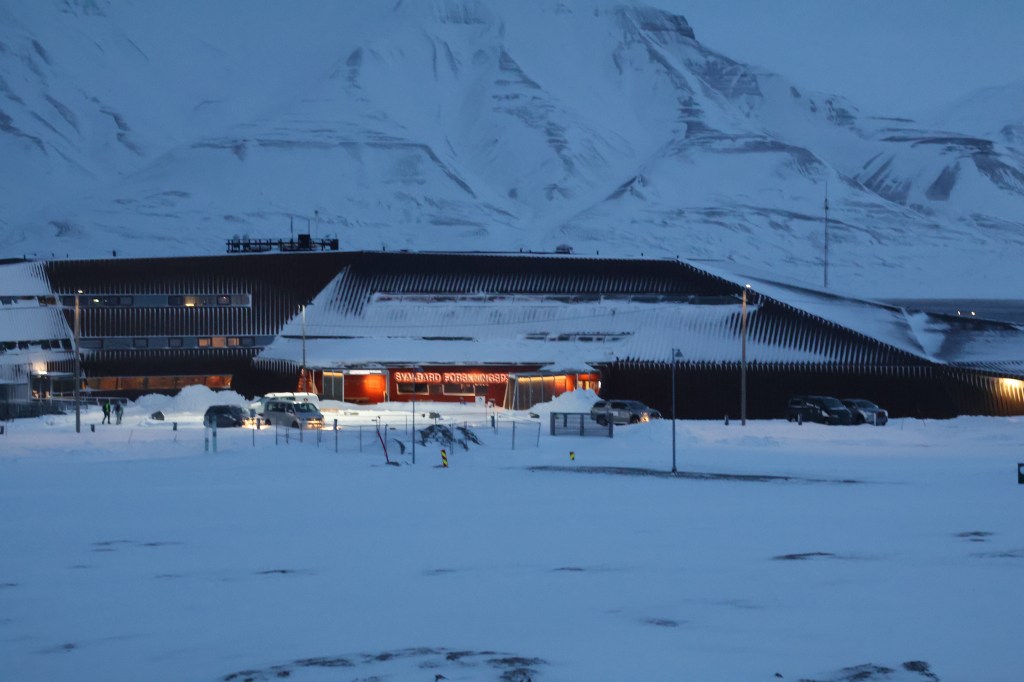
    I was feeling overwhelmed and unable to focus, so I decided to take a break and go for a weekend getaway. I packed a couple of t-shirts, my warm jacket, and all my wintry accessories, and off I went to Svalbard, Longyearbyen. It’s the northernmost human settlement in the world, and I was hoping to find silence and peace to practice yoga and meditate—to pull myself together.

    The village is otherworldly, to say the least. I got there on a cloudy afternoon on 8 February, and the place is unbelievable at this particular time of the year as the long Arctic night starts to fade into timid, short blue days. It’s not like a fully clear day; it’s just that intermezzo between day and night, lasting about five to six hours during this period of the year.

    It was with a bit of trepidation that I descent into that desert of ice with no vegetation and temperatures below zero—not too cold, though, just enough to remind you that the place is inhospitable enough to kill you in a few minutes if you get lost and a storm reaches you.

    However, the hotel was amazingly comfy, and the silence was divine! I took a bath and had a long yoga session before setting aside an hour for deep meditation. That was what I needed to tune myself back in with my inner self and regain my focus.

    One thing that struck me, though, was the fact that people didn’t seem as relaxed as I had expected. I thought that after three months in the darkness, people would be as calm as we normally get at night. You know, we’re different by night. But that didn’t seem to be the case with people in Svalbard. They were mostly kind and friendly, but I noticed something discomforting underneath—some sort of uneasiness that could well be worked out by a little yoga practice.

    The following day, I was already on my way back to London, and it turned out to be one of the most remarkable days of my life. It became day at about 9:00 AM. I had a marvellous breakfast, went for a walk, and took some pictures of that amazing blue light that would never cease to wow me. At 3:00 PM, we took off, heading to Oslo, and it was already pitch-dark. But as soon as we crossed the clouds, the light changed—it became like early morning before sunrise. The more we flew southeast, the brighter it became. After a few minutes, we glimpsed a flat orange-coloured line at the end of the horizon, which grew larger and larger until the sun emerged between the clouds and the sky. As we flew further, it became bigger and bigger, standing just above the horizon line for a couple of hours before we descended, touched the clouds, and watched it disappear, making way for the nightfall.

    It was the longest and most beautiful sunset I had ever seen, and it looked like a sunrise—rising to a certain level and lingering there before finally deciding to go down again.

    I felt blessed when we landed in Oslo, but then a few setbacks brought me back to reality. The airport was undergoing some refurbishment, so we had to take a bus to reach the terminal. Once there, I discovered that the transit area for non-Schengen citizens was makeshift. The immigration officer was a bit confused, struggled to understand English, and was adamant that I was in the wrong place. He refused to let me pass and instead sent me in search of someone to accompany me through the transfer wing. But nobody seemed to be available. After a bit of back and forth—and when some officials started to feel embarrassed by the situation—the officer finally called me back to his till, stamped my passport, and let me through so I could reach my boarding area.

    Once there, an airport employee came and asked all passengers to get up, exit the boarding room, and wait in line in the corridor for about 30 minutes before we were allowed to board the plane.

    Once onboard, I noticed that my fellow passenger wasn’t very friendly. But as I was sitting by the window at an exit, and the seat next to me was empty, I crossed my legs in a lotus pose and dove into deep meditation for the entire flight to London. That attracted a lot of attention—I could hear people taking pictures and commenting excitedly about my posture. I couldn’t help but be slightly amused when I noticed that my seatmate, who had been almost cold when we first met, was now anxious to strike up a conversation. But by that point, I was already deeply interiorised and wasn’t interested in socialising anymore.

    Today, the only thing I could think about was his reaction and change of attitude—how it must have felt to him to realise that he had judged me by my appearance, only to soon discover that I was nothing like he had anticipated.

    How silly of me to waste my time thinking about such irrelevancies! After a beautiful weekend in one of the most breathtaking places on earth, after witnessing the longest sunrise/sunset I’ve ever seen, and after the unique experience of going into deep meditation while flying, my childish mind still fixates on a minor, pointless revenge against a complete stranger who, unwillingly, had been cold to me at first.

    How is it that our minds are always trying to distract us from the things that truly matter? Why is the ego always trying to overshadow the soul?

    I wish I could stay in that blessed state of mind forever, but I can’t help thinking about minor earthly pleasures and worries.

    Any suggestions?

  • Achieving Illumination

    The Four Pillars of Spiritual Transformation

    Four Steps You Need to Take to Achieve Illumination
    Believe. Courage. Surrender. The Relinquishment of the Ego.

    Let me start with the premise that I’m not an enlightened master—not yet, although I’m working towards it. This blog is about my discoveries so far. It’s based on my real-life experiences, and I write about them in the hope that they might help someone on the path.

    Like a seed needs to decay before it sprouts, we must deconstruct ourselves before we are reborn as enlightened beings. This rebirth can be metaphorical or literal, depending on personal circumstances.

    As far as I can tell, it is a painful process. That’s why, I guess, we’re often subconsciously hesitant to commit to the spiritual path, taking untold incarnations before we choose to do so.

    Is fear justified? My response is that it is not—since God always takes care of us. However, one must believe, and this is the most difficult part. We need to refine our intuition first and then trust it, because we will always be required to risk everything, quite literally.

    The interesting thing is that we usually lose everything, hence the pain. To believe, you must make a covenant with God, offering Him your sincerity and love. Ask Him for a signal, and when it arrives, you’ll know you’re on the right path.

    We are built upon countless certainties accumulated over many incarnations. These certainties are shortcuts our subconscious uses to make quick decisions and keep us within our comfort zone. However, that comfort zone is like a maze, and we need to find a way out if we are to avoid returning indefinitely to this plane.

    There will come a moment when you feel utterly alone. Nobody will understand you or care about your predicament. When that moment comes, you’ll have to leap across the dark void, knowing there is no turning back. This takes courage.

    Faith and Courage. Now, Surrender.

    I was blessed with one of the greatest gifts anyone has ever received. My guru, Paramhansa Yogananda, came to me in flesh and blood on the night of August 15, 2010. For those who don’t know, Yogananda was a great enlightened yoga master who brought the science of Kriya Yoga to the West in the early 20th century. He died on March 7, 1952, in Los Angeles. I had prayed for a sign that Jesus had sent Yogananda to lead me to illumination, and God answered my prayer in that marvelous way.

    The event was so unique and grand that it seemed enough to ensure I’d never stray from the path to illumination. I felt so empowered that, for a moment, I believed I had already reached the heights of yoga. I was in ecstasy for several days.

    Soon after, I heard the sound of Om enveloping my whole body. A visible light surrounded me, and an incredible magnetism radiated from me. Yet, I was about to learn that this glorious blessing was only a lifeboat to keep me afloat through the storms ahead.

    During this blissful state, I dumped a damaged cellphone down a slope into a ravine. Although I immediately regretted it, it took me four days to retrieve and properly dispose of it. When I finally did, the phone—drenched, with a dead battery and no SIM card—rang. As I answered, a strong wind knocked me violently into the ravine. I fell headfirst between two massive stones, miraculously escaping unharmed.

    That was the first sign I didn’t fully grasp the magnitude of what I was experiencing.

    Soon after, I went on a pilgrimage to India, where I lost my left hip and had to get an artificial replacement. Upon returning to Italy, I developed purulent wounds on my shins. Over the next two years, I suffered memory loss, disorientation, a near-death experience, a liver tumor, and the loss of all my possessions.

    Despite these trials, I recalled my covenant with God: to do everything I could to please Him if He showed me the way. This promise, along with countless miracles, kept me on the path.

    Eventually, I realized that surrender—complete acceptance of God’s will—was the key to liberation. When I fully embraced this, joy and peace returned to my life.

    The Relinquishment of the Ego

    When we realize we are all part of the same consciousness, it becomes easier to let go of uniqueness, separateness, self-importance, and ego. We’re all manifestations of God, who created the veil of illusion, or Maya, for His enjoyment. Maya makes us believe we’re separate, but in reality, we’re one.

    Understanding this allows the ego to fade away. No matter where we are on our spiritual journey, comparing ourselves to others is futile; everyone has unique lessons to learn.

    For me, the journey has been about depending solely on God, letting go of attachments, and burning past karma. Although I am still a work in progress, I trust that hatha yoga, Reiki, meditation, a balanced diet, and a simple life free from distractions are helping me bear fruit.